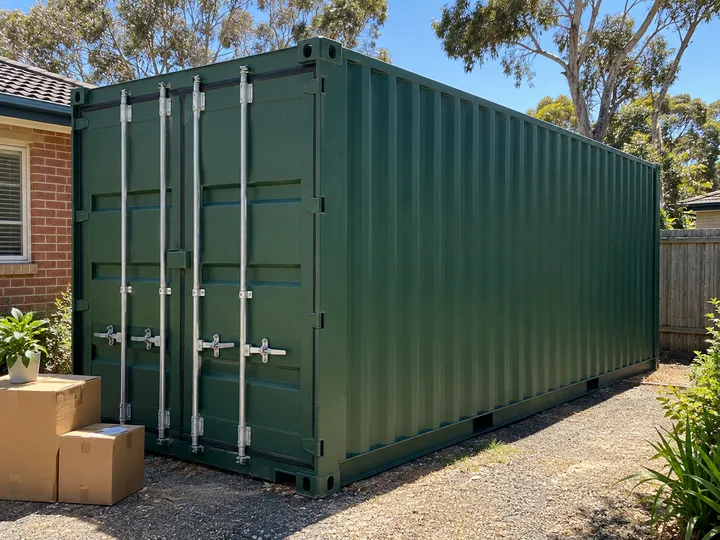
What a shipping container actually costs in Australia
Container pricing looks opaque from the outside and it is not, really. There are three variables that matter and everything else is noise. Here is how the number is built and where the traps are.
Start with the three variables
The price of a container is set by grade, size and where it has to come from. In that order.
Grade moves the number more than size does. The gap between an as-is unit and a new single-trip unit of the same size is often larger than the gap between a 20ft and a 40ft. If you are comparing two quotes and one is dramatically cheaper, grade is the first thing to check and it is very often the whole explanation.
Size is not linear and it is not intuitive. A 40ft is roughly twice the floor area of a 20ft and nothing like twice the price — used 40ft units often sit only a few hundred dollars above used 20ft units, which makes them by far the cheapest steel per square metre. A 10ft costs more than a 20ft, every time, because they are scarce and most of them are purpose-built rather than simply smaller.
Where it comes from is the part that quietly does the damage. A container sitting at a depot twenty minutes from your address and an identical container three hundred kilometres away are the same container and not remotely the same price delivered.
Guide prices
These are starting figures, in AUD, ex GST, before cartage:
- 20ft used, cargo-worthy: from $2,200
- 20ft new single-trip: from $3,300
- 40ft used, cargo-worthy: from $2,600
- 40ft new single-trip: from $5,500
- 10ft used: from $4,350
- 10ft new: from $6,400
- 20ft hire: from $27 a week
They are guide prices and they are honest ones. What actually gets quoted depends on grade, on what is standing in the depot the week you ring, and on the cartage to your address.
The delivered price is the only comparable number
This is the single most useful thing to know when you are ringing around. A container price without cartage is not a price, because cartage is not a small line item — on a regional delivery it can be a meaningful fraction of the container.
The pattern to watch for is a very attractive unit price followed by a freight figure that appears at invoice stage, or a "from" price that turns out to apply to a grade you would not want. Ask every supplier for one delivered figure to your actual address, for a named grade. Then the comparison is real.
What moves the price week to week
Used container pricing tracks global shipping. When there is a surplus of empty boxes in Australian ports, used prices soften. When lines are repositioning equipment out of the country, they firm up. Neither of those is anything a supplier controls and both are why a price quoted six weeks ago may not stand.
New single-trip pricing is steadier because it is driven by manufacturing cost and the exchange rate rather than by local surplus.
Where people overspend
Three places, consistently.
The first is buying new when cargo-worthy would have done. If the container is going to sit on a block and keep rain off tools, a checked cargo-worthy unit does exactly the same job for a lot less. New single-trip is worth the money when appearance matters, when it is being converted, or when it is going somewhere it will be seen by customers.
The second is buying two 20ft units when a 40ft would have fitted, or a 40ft when the site was only ever going to take a 20ft. Get the access question answered before the size decision, not after.
The third is buying as-is to save a few hundred dollars on a job that genuinely needed the container to stay dry inside. As-is units are not sold watertight. They are a good buy for the right job and a false economy for the wrong one.
More guides
Getting a container onto your block — the access questions that decide everything
What a delivery truck actually needs: run-in length, width at the pinch point, headroom and ground bearing. The four measurements that decide whether your delivery is simple or a crane job.
Cargo-worthy, as-is and new — what the grades actually mean
The three container grades explained without the marketing language, including what wind and watertight is really testing and when as-is is the right buy.
What to check on a used container before you accept it
A ten-minute inspection that catches nearly every problem: the floor, the door gasket, the daylight test, the corner castings and the lock box.
Got the theory — want the price?
One delivered figure, cartage included. Every enquiry answered within one business day.
Or skip the form — 1300 263 976