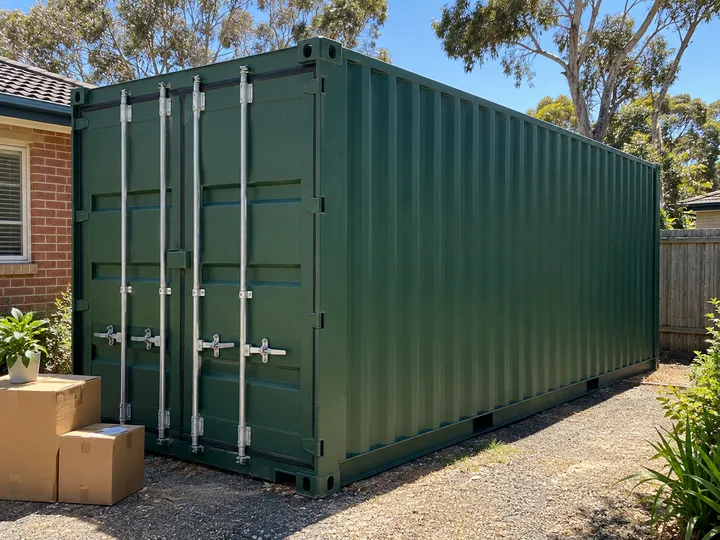
Hiring versus buying — the arithmetic, honestly
There is a straightforward answer to this and it does not need a spreadsheet. It comes down to how long you need it and whether you want the asset at the end.
The rough arithmetic
A 20ft hires from about $27 a week. A used cargo-worthy 20ft buys from about $2,200. Ignore everything else for a moment and the crossover is somewhere in the region of eighteen months to two years.
But that comparison is not quite right, for two reasons that pull in opposite directions.
Against buying: you also pay delivery, and at the end you either keep a container you no longer need, sell it, or pay to have it taken away. Against hiring: you pay delivery and collection, and at the end you have nothing.
The practical version is this. Under a year, hire is almost always better. Over two years, buying is almost always better. Between the two, it depends less on the money than on whether you want to own a container.
What hire is genuinely better for
- Projects with an end date. A build, a fit-out, a renovation, an event, a harvest, a shutdown. You know when it stops and you do not want an asset afterwards.
- Cash flow. Weekly hire is an operating cost. A purchase is capital. For some businesses that distinction is the whole decision.
- Uncertainty. When you genuinely do not know whether you need it for three months or three years, hire and convert to purchase later if it turns into a permanent thing.
- Not wanting the disposal problem. Getting rid of a container you no longer need is a real job. Hire makes it somebody else's.
What buying is better for
- Anything permanent. Farm storage, workshop storage, a lockable store on a business premises. If it is still going to be there in three years, buy it.
- Anything you want to modify. Cutting a door, adding vents, fitting shelving, painting it, putting a roof over it. You cannot do that to a hire unit.
- Anywhere remote. Where the cartage is significant, paying it twice for a hire that ends is painful. Buying means paying it once.
The costs people forget on both sides
On hire: the collection at the end is a second cartage charge and it is not always quoted at the start. Ask for it up front. Also ask what condition the unit has to come back in, and what a damage charge looks like.
On purchase: the container is worth something at the end, but selling one privately takes time and the buyer will want it delivered. Factor a resale as a real but slow recovery, not as a rebate.
Getting the answer in one phone call
Tell us three things and we will tell you which way to go, including when the answer is the one that earns us less: how long you need it, whether the need has a hard end date, and whether it is going to be modified. That is the whole conversation.
More guides
Getting a container onto your block — the access questions that decide everything
What a delivery truck actually needs: run-in length, width at the pinch point, headroom and ground bearing. The four measurements that decide whether your delivery is simple or a crane job.
What a shipping container actually costs in Australia
Guide prices by size and grade, what really moves the number, and why the delivered price is the only figure worth comparing between suppliers.
Cargo-worthy, as-is and new — what the grades actually mean
The three container grades explained without the marketing language, including what wind and watertight is really testing and when as-is is the right buy.
Got the theory — want the price?
One delivered figure, cartage included. Every enquiry answered within one business day.
Or skip the form — 1300 263 976