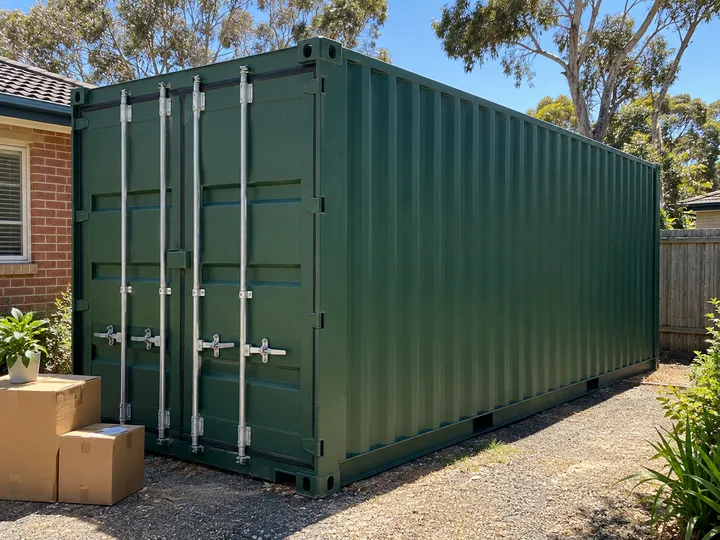
Container security — locks, lock boxes and how containers actually get broken into
A shipping container is a steel box with one way in. That makes it one of the most secure things you can put on a site, and it makes people complacent about the one part that is not steel: the padlock. Here is where containers actually get opened, in the order it happens.
The doors are the only real target
Nobody cuts through the wall of a container. It is 2 mm corrugated weathering steel and it takes a long time, a lot of noise and a lot of sparks. The roof is the same. The floor sits above steel cross-members and, on most sites, above the ground.
So every break-in worth planning for happens at the door end, and it happens in one of three ways: the padlock is cut, the locking bars are attacked, or the hardware is simply unbolted. Everything below is about those three.
1. The padlock, and why a normal one is the wrong tool
A conventional padlock has an exposed shackle — the U-shaped bar. That shackle is the entire security of the container, and a pair of long-handled bolt cutters will go through most hardware-store padlocks in a couple of seconds without much noise.
What you want instead is a container lock, sometimes called a puck lock, disc lock or monoblock. It is a thick steel cylinder with no exposed shackle at all — the locking mechanism sits inside the body, and there is nothing for a cutter to get around. There is no cheaper improvement to container security available.
Two things to check when you buy one. First, that the body is hardened steel rather than a soft alloy with a hardened face. Second, that it actually fits inside the lock box on your container, because they vary and a lock that will not fit is a lock you will not use.
Get a keyed-alike set if you have more than one container. People defeat their own security when they get sick of carrying five keys.
2. The lock box — what it is and what it is not
A lock box is a steel shroud welded over the padlock position on the right-hand door. It covers the lock and the staple from above and from both sides, leaving only a slot at the bottom for the key. The point is geometric: bolt cutters and pry bars need to get a jaw around something, and the box means there is nothing to get around.
Most modern containers have one. A lot of older units do not, and it can be welded on afterwards — it is a straightforward job for anyone with a welder, and it is worth doing before the container is loaded rather than after.
What a lock box does not do is stop a determined attack with a cordless angle grinder. Nothing on a container does. What it does is remove the fast, quiet, low-effort options, which is what the overwhelming majority of opportunist theft relies on. Take the two-minute break-in off the table and you have done most of the work.
3. The hardware people forget
Two things worth walking around and looking at on your own container.
The locking bar keepers. The vertical bars are held to the door by brackets, and the cam housings at top and bottom are bolted or welded. On some units those are bolted with ordinary nuts and bolts. A spanner defeats the whole door in a few minutes and leaves no obvious damage. If yours are bolted, have them tack-welded.
The hinges. Container door hinges are heavy and the pins are usually captive. Check yours are — a hinge pin that can be driven out is a door that can be lifted off with the lock still done up.
The free measure that beats all the hardware
Where you put the container matters more than what you put on it.
Place it so the doors face a wall, a fence, a shed or another container, with just enough room to open them — around 2.4 m of swing. A door that cannot be swung wide cannot be worked on, cannot be loaded from quickly and cannot be approached without the intruder putting themselves in a corner. It costs nothing and it is the single most effective thing on this page.
The variations are all good too: doors facing the house rather than the street; doors facing the neighbour's floodlit driveway; two containers set with their door ends facing each other a couple of metres apart, which makes a private, awkward, well-overlooked pocket that nobody wants to work in.
The corollary is worth saying plainly. A container placed near the boundary with its doors facing a quiet road, screened from the house by the container itself, is the easiest target on the block. That is exactly where people put them, because it is the easiest place to deliver to.
Rural and remote sites
A container on a back paddock, a bush block or a site that is unattended for weeks is a different problem. Nobody hears anything, so noise and time stop being deterrents.
What works there is a combination of the above plus making the container awkward to get a vehicle beside — thieves need to carry things away, and almost nothing worth stealing from a container is carried by hand. Placing it so a vehicle cannot pull up square to the doors does more than another lock will.
Beyond that: solar sensor lighting on an approach; a trail camera that reports over the mobile network; a GPS tracker inside for a unit that could be lifted whole. On a genuinely remote site the container itself is sometimes the target, and a tracker is the only thing that helps once it is on a truck.
What insurers usually want to see
This varies by insurer and by policy, so ring yours rather than taking a website's word for it. That said, the questions that come up most often are whether the container is locked with a container-specific lock rather than a general padlock, whether it has a lock box, whether it is inside a fenced or gated area, and whether the contents are itemised anywhere.
Photograph the inside of your container when it is loaded and keep the photographs somewhere that is not in the container. It takes two minutes and it is the difference between a claim and an argument.
Things that do not work
- A chain around the locking bars. Slower to open for you than for anyone else, and a chain is easier to cut than a container lock.
- Two ordinary padlocks. Twice the work is still a few seconds' work.
- Hiding it. Vegetation screening a container hides the intruder, not the container.
- A sticker saying it is alarmed. If it is, say so. If it is not, all it does is confirm there is something inside worth alarming.
A sensible standard setup
For most sites, in order of value for money: a container lock in a lock box, doors facing something solid, tack-welded keepers if the originals are bolted, a light on the approach, and photographs of the contents kept elsewhere. That is not much money and an afternoon's work, and it puts the container well beyond the effort most opportunist theft is willing to spend.
If you are buying, ask before the unit is loaded: does it have a lock box, are the keepers welded, do all four locking bars seat properly, and will the lock you already own fit. We will tell you what is fitted to the actual container we are quoting — ring 1300 263 976 — and if a unit is missing a lock box we would rather sort that out before it goes on the truck than after.
More guides
Shipping container dimensions and specifications — the numbers that actually matter
Internal and external dimensions, door apertures, tare and payload for 10ft, 20ft, 40ft and high cube containers — and the numbers that catch people out.
Getting a container onto your block — the access questions that decide everything
What a delivery truck actually needs: run-in length, width at the pinch point, headroom and ground bearing. The four measurements that decide whether your delivery is simple or a crane job.
What a shipping container actually costs in Australia
Guide prices by size and grade, what really moves the number, and why the delivered price is the only figure worth comparing between suppliers.
Got the theory — want the price?
One delivered figure, cartage included. Every enquiry answered within one business day.
Or skip the form — 1300 263 976