DAN'S SHIPPING CONTAINERS
Every enquiry answered within one business dayYou hear back from a person, not an autoresponder. Enquiries that land on a weekend are answered the next business day.
Guide · 6 min read · 03/08/2026

Cargo-worthy, as-is and new — what the grades actually mean

Grade is the most important word in a container quote and the least consistently used. Different sellers mean different things by the same term. Here is what we mean, and what to ask anybody else.

New single-trip

Built, loaded once for the voyage out to Australia, and sold here. Sealed, unmarked, original paint, clean floor, doors that seat properly because nothing has ever been bent. Technically it is a used container — it has carried one load — and in every practical sense it is new.

Worth the money when appearance matters, when it is going to be converted into something, when it needs to look right in front of customers, or when it is going to hold something that cannot tolerate any doubt about the seal.

Cargo-worthy

A used container that is still fit to carry cargo internationally. It has been surveyed, it will have surface marks and repairs, and it is checked wind and watertight before it leaves the depot.

That phrase is doing specific work. It means the doors are shut and the container is inspected from inside for daylight — at the roof, at the corners, along the seams, around the door gasket. If light gets in, water gets in. It is a rain test, not a submersion test, and it says nothing about what happens if water comes up from underneath.

For the overwhelming majority of storage jobs this is the right grade and the right value. It keeps weather out, it locks, and it costs a fraction of new.

As-is

Cheaper again, and not sold watertight. An as-is unit might have a patched repair, a dent that has opened a seam, a soft spot in the plywood floor, a door seal that no longer seats, or surface rust that is more than cosmetic.

None of that makes it a bad purchase. As-is is a genuinely good buy for site fencing and hoarding, for a workshop where the roof over it is somebody else's, for a base that is going to be cut up and modified anyway, or for storing things that do not care about a bit of moisture.

What matters is that you know before it arrives. Our rule is simple: we tell you what is wrong with an as-is unit rather than let you find it on delivery day, and we will send photographs of the actual unit on request, before delivery.

The questions to ask any supplier

  • What grade is this exact unit, and is it checked wind and watertight?
  • Can I have photographs of the actual container, not a stock image?
  • What is the floor like?
  • Do the doors seat and lock properly, and has anything been repaired at the door end?
  • Is there a lock box fitted?

A supplier who can answer all five about a specific unit is selling you a specific unit. A supplier who answers in generalities is selling you whatever is nearest the gate.

Grade against the job

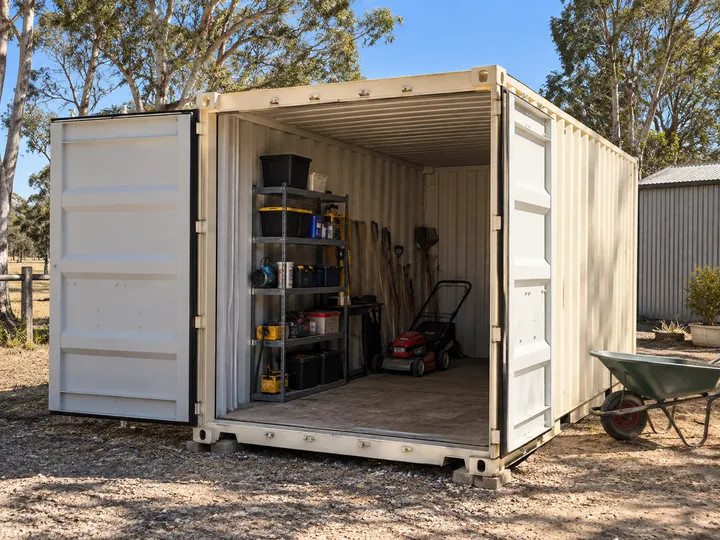
The useful way to decide is to ask what happens if it gets damp inside. If the answer is "nothing much" — steel, fencing, plastic bins, garden equipment — as-is will serve. If the answer is "that would be a problem" — tools, stock, timber, furniture, documents, anything electrical — buy cargo-worthy or better and stop thinking about it.

More guides

Got the theory — want the price?

One delivered figure, cartage included. Every enquiry answered within one business day.

Tell us the job

Four quick questions about the container, then how to reach you. Every enquiry answered within one business day.

1. What are you after?

And how do we reach you?

You hear back from a person, not an autoresponder. Enquiries that land on a weekend are answered the next business day. Your details stay with us.

Or skip the form — 1300 263 976

Call 1300 263 976Get a price